TECHNOLOGY
Understanding Reefer Airflow
How refrigerated trailer airflow works and why two-zone temperature monitoring provides superior cargo protection compared to single-point measurement.
Technical Reference Diagram
Engineering-grade visualization showing airflow physics, temperature gradients, and sensor placement in a refrigerated trailer.
Need to bring your team up to speed? Grab the downloads below — they're yours to share internally. Because explaining cold chain physics shouldn't require a whiteboard and three cups of coffee.
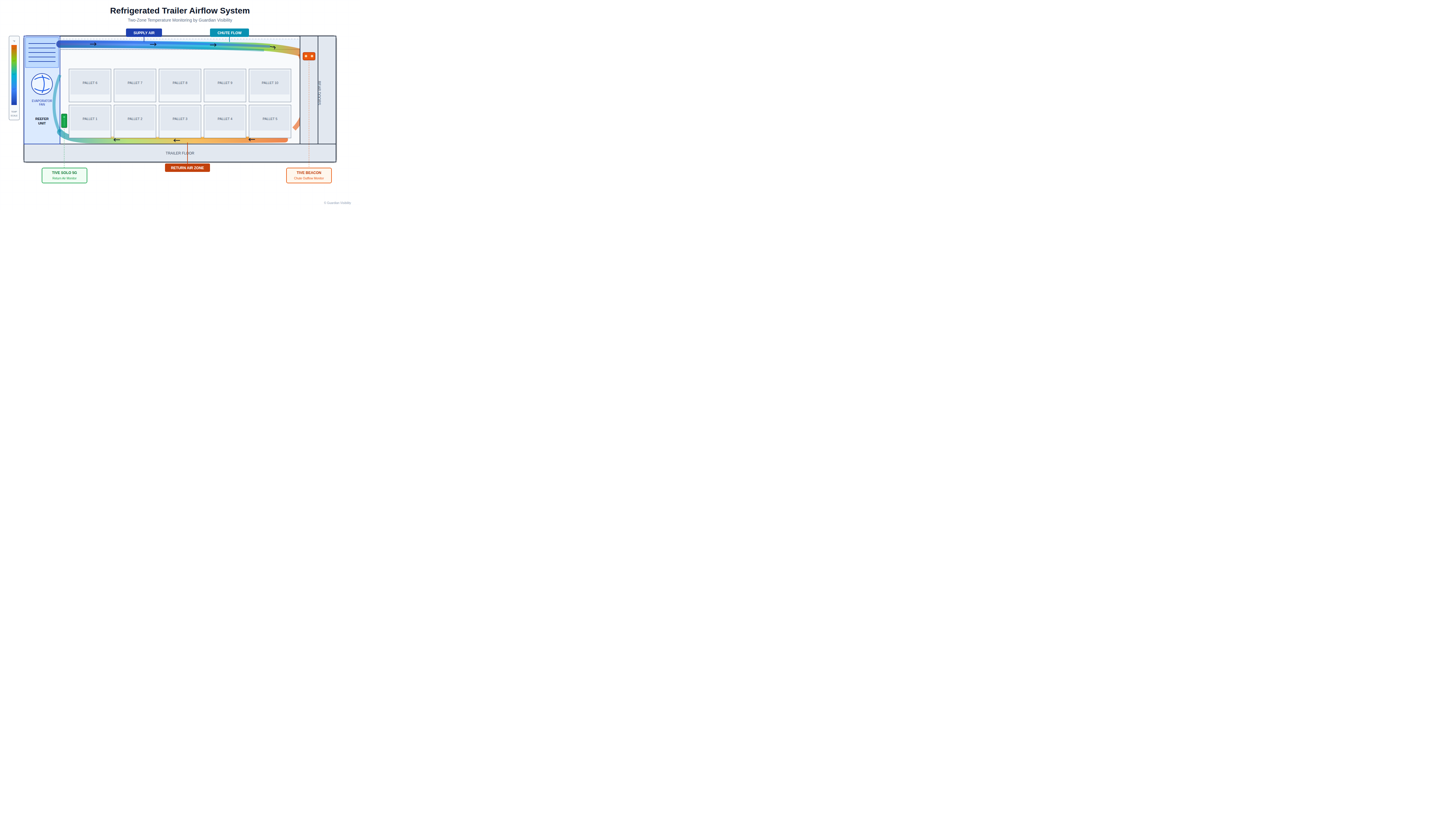
Dark Theme Version
Optimized for presentations and keynote slides.
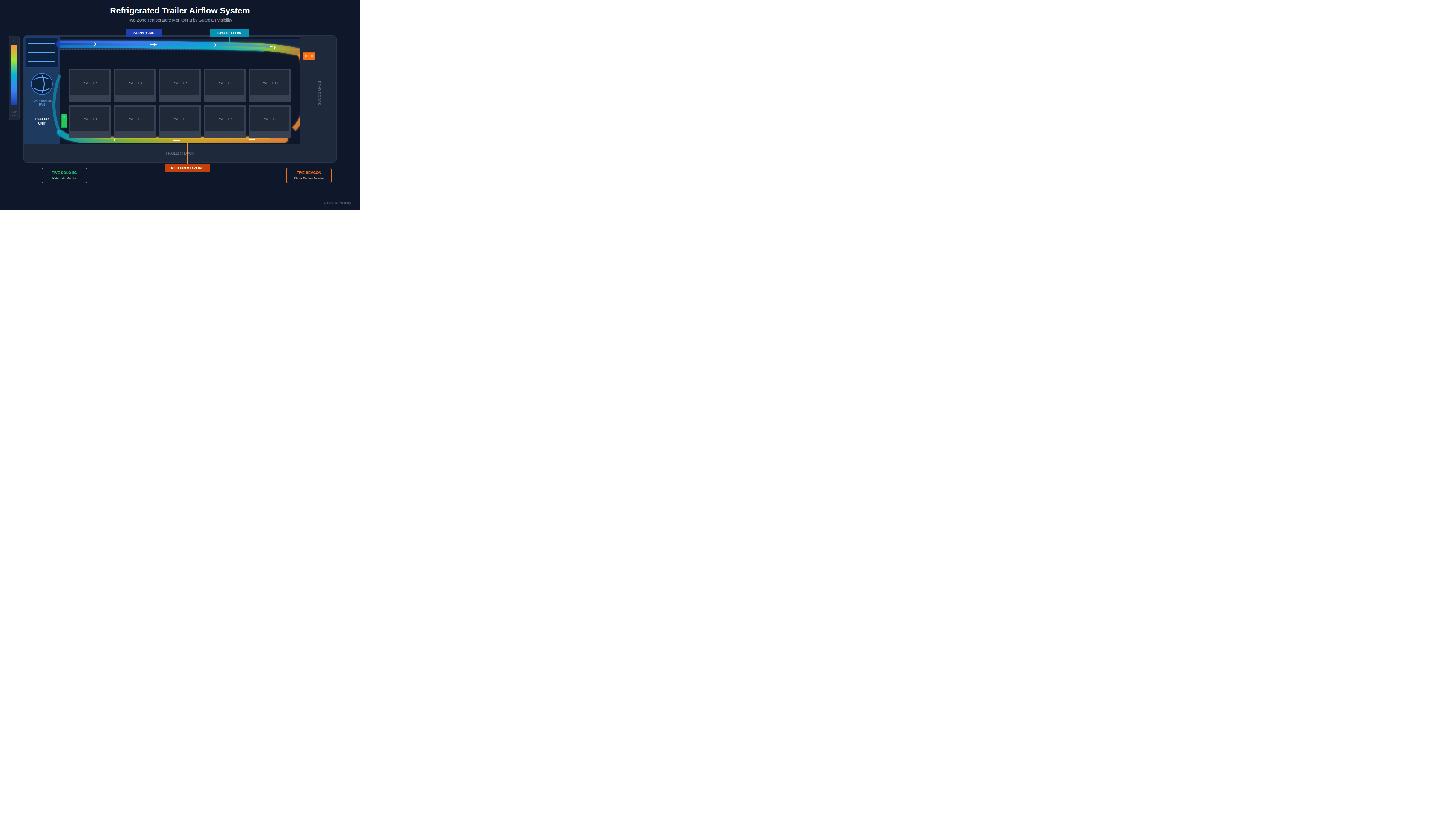
Marketing Visualization
Clean, impactful design for sales presentations, broker education, and carrier trust-building.
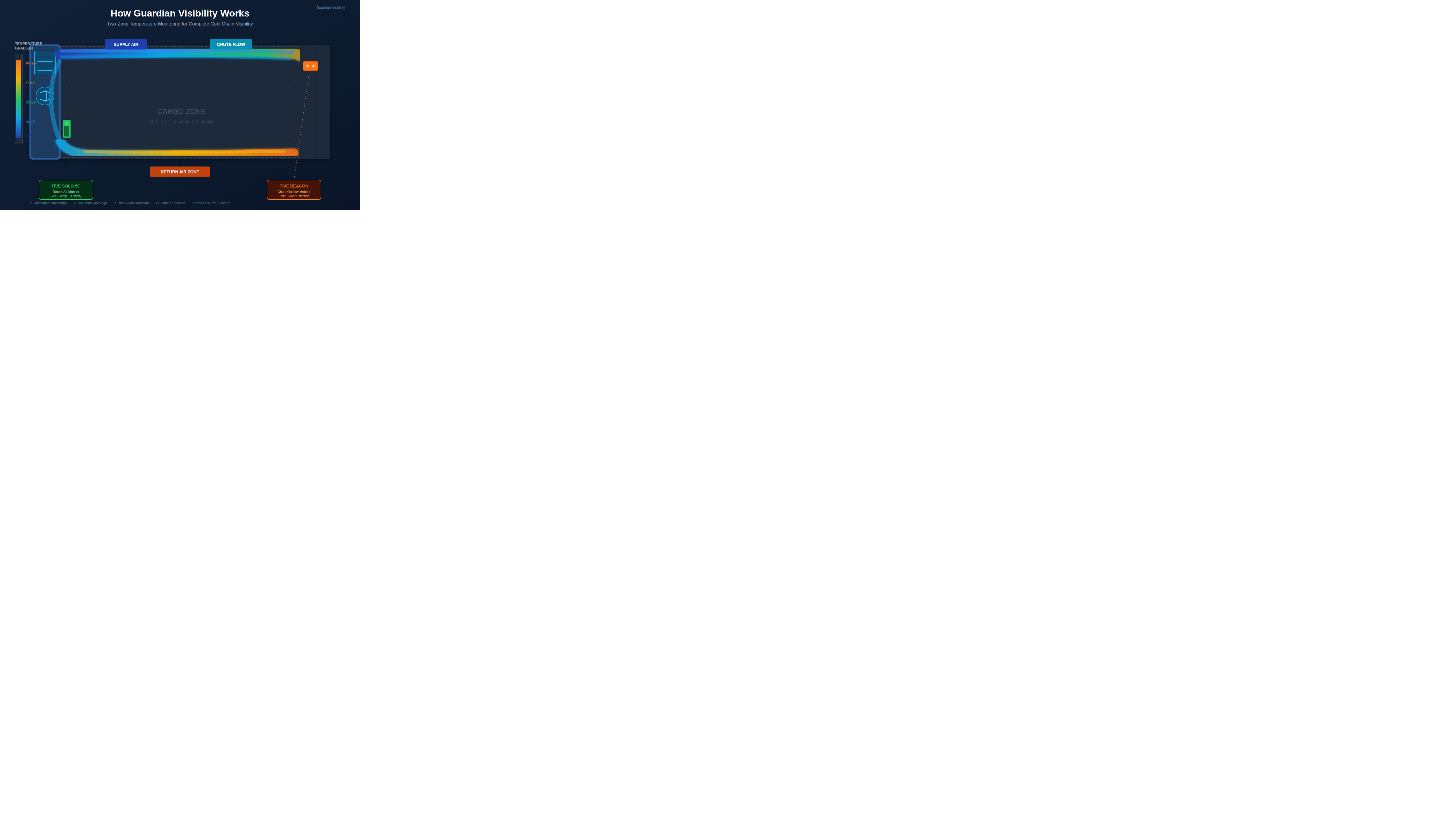
Print-Ready Version
Light background version for printed materials, handouts, and documentation.
The Science Behind Cold Chain Airflow
Forced Convection
The evaporator fan creates forced convection, pushing cold air through the ceiling-mounted chute. This active circulation is essential for maintaining consistent temperatures throughout the trailer.
Chute Flow Dynamics
Air transitions from laminar to turbulent flow as it travels through the chute, gradually warming as it absorbs heat from the cargo. The chute geometry ensures even distribution.
Thermal Stratification
Cold air is denser than warm air and sinks. After absorbing heat from cargo, the warmer air naturally rises toward the ceiling, creating a stratified temperature gradient—warmer at the top, colder at the bottom.
Return Air Path
Return air flows down the back wall, along the floor, under the pallets, back to the evaporator intake. This completes the circulation loop and allows continuous cooling of the cargo space.
Why Two Zones Matter
Traditional single-point temperature monitoring only captures conditions at one location—usually near the reefer unit. This misses critical information about how temperature varies throughout the trailer.
Guardian Visibility's two-zone approach monitors both the supply air (via the Solo 5G at the front wall) and the chute outflow (via the Beacon above the rear doors). This provides:
- →Complete temperature visibility across the entire cargo space
- →Early detection of cooling failures or door-open events
- →Better data than a reefer download for claims protection
- →Scientific validation matching USDA refrigerated transport standards
Ready to Upgrade Your Cold Chain Monitoring?
Join the Carrier Preferred Program and get two-zone temperature monitoring with the first 500 installations free.